
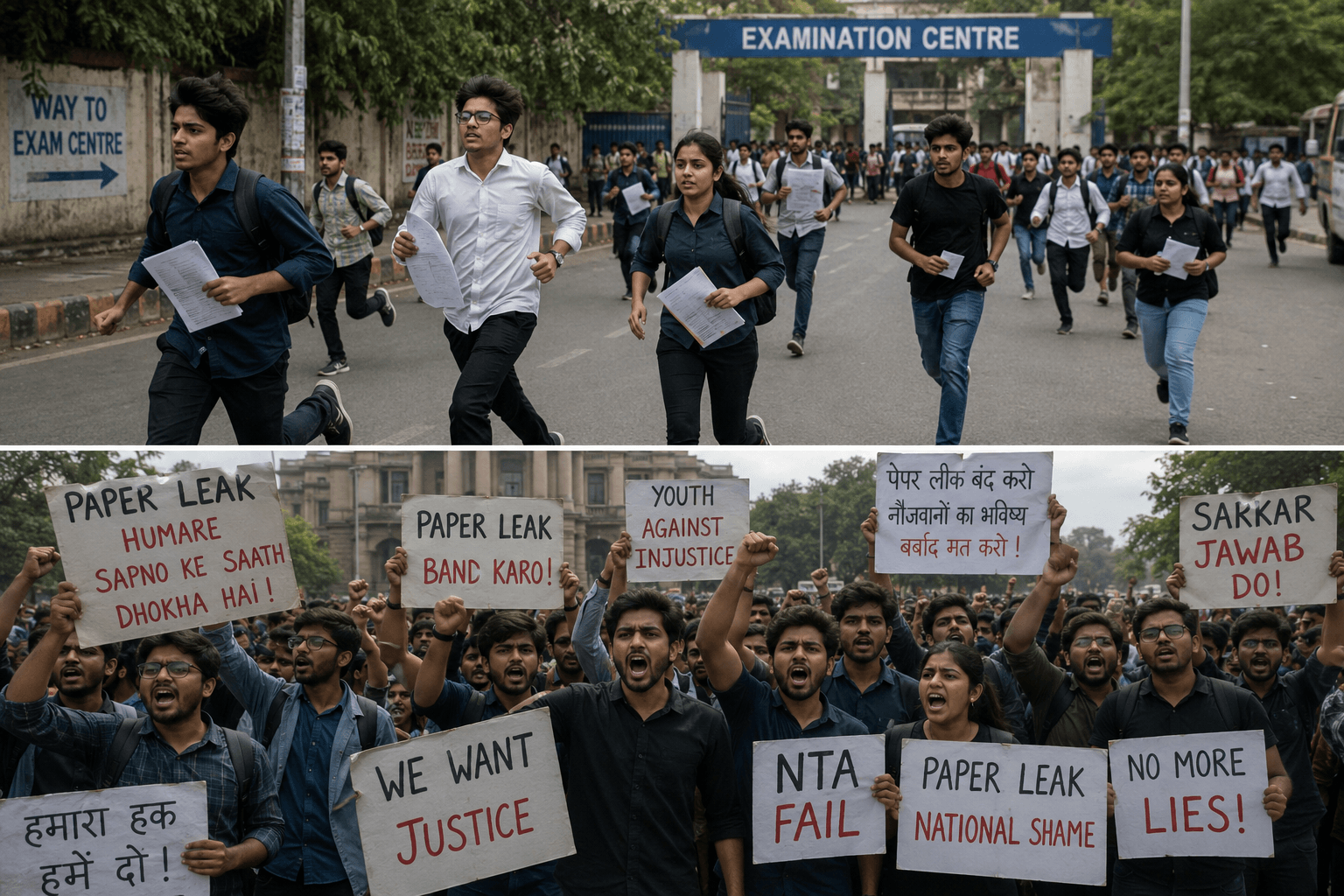
The National Testing Agency cancelled the NEET-UG 2026 examination conducted on May 3, 2026, after investigations revealed alleged widespread circulation of questions that significantly overlapped with the actual test paper. The cancellation affected over 24 lakh medical aspirants and triggered a Central Bureau of Investigation probe into what investigators described as an organized network involving coaching centers, intermediaries, and question paper circulation across multiple states including Rajasthan and Uttarakhand.

The controversy centers on a so-called “guess paper” containing approximately 400 questions, with investigators claiming that around 100 to 120 questions matched the actual NEET-UG 2026 exam. This material allegedly circulated through coaching networks days before the examination, with prices reportedly ranging from Rs 30,000 to Rs 5 lakh depending on how close to exam day it was purchased.
You need to understand how this breach occurred despite security measures like GPS-tracked question paper transport, biometric verification, and AI-assisted surveillance. The investigation has led to over 20 detentions and 13 arrests across multiple states, with authorities examining the role of coaching operators, dummy candidate rackets, and digital circulation networks that may have compromised India’s largest medical entrance examination.
ALSO READ: Bengal Elections Exit Poll 2026: Who Is Leading the Race?
Table of Contents
Key Takeaways
- The NTA cancelled NEET-UG 2026 after investigators found that a circulated “guess paper” with 400+ questions matched approximately 100-120 questions on the actual May 3 exam.
- The CBI is investigating an organized network across Rajasthan, Uttarakhand, and other states involving coaching centers and intermediaries who allegedly sold leaked questions for up to Rs 5 lakh.
- The exam will be re-conducted at no additional cost to the 24 lakh affected students, with the same registration details and center preferences remaining valid.
Timeline of the NEET UG 2026 Paper Leak Events
The NEET UG 2026 controversy unfolded over several weeks, beginning with the May 3 examination and culminating in a full cancellation after investigators discovered widespread circulation of questions that matched the actual test. The scandal involved multiple states, arrests of over 20 individuals, and ultimately a CBI investigation into what became one of India’s largest medical entrance exam frauds.
ALSO READ: UGC Creator vs Influencer: What’s the Real Difference?
Key Dates and Major Developments
The NEET-UG 2026 exam was conducted on May 3 across India for over 24 lakh aspirants seeking admission to MBBS, BDS, and related medical programs. The National Testing Agency implemented security measures including GPS-tracked question paper transport, biometric verification, AI-assisted CCTV surveillance, and 5G jammers at examination centers.
By May 7, the NTA received suspicious inputs about possible pre-circulation of exam questions. The following day, May 8, this information was escalated to central agencies for verification as concerns intensified.
Investigators discovered that one suspect had possession of the question set as early as April 30, three days before the actual examination date. The alleged guess paper containing approximately 410 questions began circulating through coaching networks days before the exam, with reports indicating around 120 questions matched the Chemistry section alone.
Initial Allegations and Early Warnings
The controversy emerged primarily from Rajasthan and Uttarakhand, where investigators traced a multi-state circulation network. The material allegedly originated from a medical student from Churu, Rajasthan studying in Kerala, who sent it to an associate in Sikar on May 1.
Coaching operators and intermediaries then allegedly distributed the questions further through paying guest accommodations and digital messaging platforms. Authorities recovered evidence marked “Forwarded many times,” indicating repeated circulation across WhatsApp and Telegram.
Pricing for the leaked material varied based on timing: up to Rs 5 lakh two days before the exam and approximately Rs 30,000 on the eve of the examination. The Rajasthan Special Operations Group identified significant overlap between circulated questions and the actual NEET UG 2026 paper, particularly in Biology and Chemistry sections, with estimates suggesting 25% of the material matched.
Exam Cancellation and Re-Examination Plans
The National Testing Agency officially cancelled the NEET-UG 2026 examination after coordination with central agencies confirmed the examination’s integrity could not be guaranteed. The government referred the case to the Central Bureau of Investigation for comprehensive inquiry into alleged pre-circulation networks, financial transactions, and coaching center involvement.
The re-examination was scheduled for June 21, affecting more than 22 lakh medical aspirants who appeared for the original test. The NTA confirmed that you will not need to complete new registration or pay additional fees for the re-test.
Your existing application data and exam center preferences remain valid. Previously paid fees will be refunded, and fresh admit cards will be issued with updated scheduling information. The Rajasthan SOG has made 13 arrests and detained over 20 individuals as part of the ongoing investigation into what authorities describe as an organized leak network spanning multiple states.
ALSO READ: The World is Staring at Modi and Netanyahu – Israel-India Bonhomie at its Peak
Uncovering the Leak: How the Controversy Emerged

The NEET-UG 2026 controversy unfolded through a combination of whistleblower alerts and investigative work that revealed a widespread circulation of exam questions before the May 3 examination. A handwritten PDF containing hundreds of questions became the central piece of evidence linking coaching networks to the alleged leak.
Role of the Handwritten PDF and Guess Papers
The controversy centered on a guess paper containing 410 questions that circulated among students weeks before the exam. Investigators discovered that approximately 120 of these questions matched the actual chemistry section of the NEET-UG 2026 examination.
The document appeared as a 150-page PDF file that spread through WhatsApp and other messaging platforms. Students received copies as far back as a month before the May 3 examination date. Unlike typical paper leaks that remain secretive, this guess paper circulated openly in the public domain, making it challenging for investigators to trace its origin.
The widespread distribution created complications for the investigation. When students obtained photocopies from local shops, those shop owners often shared the material with others, creating multiple distribution chains that obscured the original source.
Investigation by Rajasthan Police Special Operations Group
The Rajasthan Police Special Operations Group took the lead in examining the paper leak allegations after discovering the guess paper on students’ phones. ADGP Vishal Bansal stated that investigators found the PDF files during their examination of devices belonging to NEET aspirants.
The SOG focused on determining whether actual cheating occurred or if the overlap was coincidental. Bansal noted that traditional paper leak operations typically keep questions hidden until just before the exam, unlike this case where materials circulated openly. The investigation expanded to include questioning individuals from multiple locations, including Dehradun.
The probe also examined whether the large-scale circulation constituted a crime or simply represented extensive coaching preparation that happened to overlap with actual exam content.
The Pathway of Leaked Documents
The National Testing Agency received inputs about alleged malpractice on the evening of May 7, 2026, four days after conducting the examination. The NTA escalated these concerns to central agencies on May 8 for independent verification. Reports emerged from multiple states, particularly Rajasthan and Uttarakhand, suggesting coordinated distribution networks.
Investigators tracked distribution channels through WhatsApp groups and Telegram links across cities including Nashik, Gurugram, Jaipur, and Sikar. The CBI eventually arrested retired professor PV Kulkarni, alleging he leaked questions from inside the exam setting panel while conducting secret coaching sessions in Pune.
Law enforcement agencies made detentions across multiple states as they worked to map the complete network. The complexity of tracing digital distribution meant investigators had to examine each link in the chain to understand how over 22 lakh medical aspirants potentially gained access to leaked materials.
Key Accused and Networks Involved
The investigation has identified multiple individuals across several states who allegedly participated in circulating leaked examination materials. The network includes coaching institute operators, intermediaries who distributed papers through digital channels, and an insider connected to the examination authority.
Profiles of PV Kulkarni and Manisha Mandhare
The CBI has arrested Manisha Sanjay Havaldar from Pune in connection with the alleged Physics question paper leak. She was employed at Seth Hiralal Saraf Prashala in Pune and had been appointed by the National Testing Agency as an expert involved in the examination process.
Manisha Waghmare, another key figure, was detained by Maharashtra Police and handed over to the CBI. According to court submissions, Dhananjay Nivrutti Lokhande collected NEET examination material from Waghmare, who is a resident of Pune. The investigation is still determining where Waghmare obtained the paper, as the CBI continues to trace the leak’s origin back through the distribution chain.
The Involvement of Coaching Networks
Professor Shivaraj Motegaonkar, owner of RCC Coaching Institute, was apprehended as the 10th accused in the investigation. He is alleged to be close to the kingpin of the operation. Searches at his institute recovered a question bank that matched the examination paper.
The CBI is monitoring social media groups and digital networks where alleged “guess papers” and question papers were shared before the examination. A “guess paper” containing 150 pages with 410 questions was circulated, and approximately 120 of those questions appeared in the chemistry paper. This material was allegedly with students weeks before the May 3 examination date.
NTA Paper Setter and Insider Influence
The CBI has informed a Delhi court that the paper leak originated from someone linked to the National Testing Agency. Shubham Khairnar, the first person arrested for the leak on May 12, obtained the paper from a person in Pune who “had obtained the same from an NTA source,” according to Public Prosecutor Neetu Singh.
The CBI submitted to the court that identifying the NTA officials involved in the paper leakage remains a priority. The agency plans to examine the alleged role of NTA officials after questioning the seven accused in custody. The investigation involves public servants, candidates, institutes, middlemen, and other unknown persons in what the CBI describes as a “larger conspiracy” behind the leak.
Whistleblower Actions and Exposure
The NEET UG 2026 paper leak came to light through the decisive actions of a chemistry teacher from Sikar, Rajasthan, who noticed suspicious materials circulating on exam day. His detailed report to authorities triggered immediate investigations by the Rajasthan Police Special Operations Group and central agencies, ultimately leading to the exam’s cancellation.
Who Raised the Initial Alarm?
Shashikant Suthar, a chemistry teacher from Sikar, served as the primary whistleblower in the NEET UG 2026 controversy. On May 3, 2026, the day of the examination, Suthar’s landlord shared a 150-page PDF with him around 6 pm, shortly after the exam concluded at 5 pm.
The landlord’s son, a medical student in Kerala, had received the document from Gurgaon on the night of May 2. He forwarded it to his father in Sikar around 11 pm, describing it as a “guess paper” from an institute.
Suthar immediately shared the material with a senior colleague. Together, they spent hours comparing the PDF against the actual exam questions while fielding calls from students. Their analysis revealed that 135 questions matched 90 from biology and 45 from chemistry, covering all questions for those subjects.
Impact of the Sikar Whistleblower Report
After confirming the match, Suthar and his colleague approached local journalists in Sikar, who advised them to file a formal complaint first. The whistleblower reached the police station past midnight to report the suspected leak.
Over the following days, the teachers researched previous exam leak cases, including the 2015 All India Pre-Medical Test leak. They studied Supreme Court decisions and sought contact information for advocates to ensure they followed proper channels. On May 7, they sent detailed emails to the National Testing Agency, the Ministry of Home Affairs, and the Central Bureau of Investigation.
The response was immediate. Central investigation teams arrived in Sikar on May 8, followed by the Rajasthan Police Special Operations Group. The authorities acted swiftly, beginning arrests and investigations that ultimately affected over 22 lakh students who had appeared for the exam.
Role of Student and Parent Complaints
While Suthar’s formal report catalyzed official action, students and their families played a supporting role in raising concerns about irregularities. Many candidates contacted their teachers immediately after the exam to discuss questions, which helped educators identify patterns suggesting potential compromise.
The estimate suggested that the leaked material reached well over 10,000 students. Reports indicated the paper circulated through WhatsApp and Telegram links across multiple cities including Nashik, Gurugram, Jaipur, and Sikar.
Students who unknowingly received the material through various coaching networks became unwitting participants in what investigators discovered was an organized leak operation. Your awareness of these irregularities, combined with formal whistleblower action, created the pressure needed for authorities to cancel the exam and schedule a re-test for June 21, 2026.
Investigation, Arrests, and Ongoing Probes
The CBI arrested five people within days of registering the case, conducting searches across multiple states including Rajasthan, Maharashtra, and Haryana. The probe has expanded to examine National Testing Agency officials and coaching center operators who may have facilitated the leak.
CBI and Central Agency Intervention
The Central Bureau of Investigation registered a First Information Report on May 12, 2026, following a complaint from the Department of Higher Education. The case invokes charges under the Bharatiya Nyaya Sanhita for criminal conspiracy, cheating, and criminal breach of trust, along with provisions of the Prevention of Corruption Act and the Public Examinations (Prevention of Unfair Means) Act, 2024.
The initial arrests included three people from Jaipur, one from Gurugram, and one from Nashik. During these operations, investigators seized incriminating materials and electronic devices including mobile phones. The agency is collaborating with the Rajasthan Police Special Operations Group, which had initiated a preliminary inquiry before the case was transferred to central authorities.
Progress of the Paper Leak Probe
The CBI has made ten arrests as of the latest updates in the investigation. Key arrests include:
- Manisha Sanjay Havaldar: A chemistry professor arrested from Pune who was appointed by the National Testing Agency as an expert in the examination process
- Shivraj Raghunath Motegaonkar: Director of a Maharashtra-based coaching centre, arrested as the tenth accused
The conspiracy began approximately one week before the exam. Investigators discovered that the National Testing Agency had received inputs about the circulation of documents linked to the exam before the examination date. A Latur hospital is under investigation for allegedly hosting closed-door sessions where exam questions may have been circulated nearly two weeks before the test.
Judicial Proceedings and Custody Updates
The CBI is conducting forensic and technical analysis of seized electronic devices to trace the full extent of the conspiracy. Digital networks and social media groups where alleged “guess papers” were shared before the examination are being monitored by investigators.
The probe now focuses on identifying officials from the National Testing Agency and other departments involved in the question paper leakage. Further searches are underway based on emerging leads, with several other suspects currently under examination. The agency has emphasized its commitment to a comprehensive and impartial investigation to uncover all individuals involved in the paper leak allegations.
Security Measures and Systemic Vulnerabilities
The National Testing Agency implemented multiple security layers for NEET-UG 2026, yet approximately 120 out of 410 questions appeared in a circulated guess paper before the examination. Despite technological upgrades and strict protocols, the examination system continues to face breaches at multiple points in the logistics chain.
AI-Assisted CCTV Monitoring and Other Protocols
The National Testing Agency deployed several security measures for NEET-UG 2026, including biometric verification of candidates at examination centers and GPS tracking of examination materials during transportation. AI-enabled CCTV monitoring was implemented alongside real-time digital surveillance systems.
Additional protocols included multi-layered sealing mechanisms for question papers and controlled access systems at printing and storage facilities. The agency also mandated identity authentication procedures and maintained strict confidentiality requirements throughout the paper-setting process.
However, these measures failed to prevent examination material from leaking nearly 42 hours before the test. The breach occurred despite the comprehensive security infrastructure, raising questions about implementation gaps and human vulnerabilities within the system.
Pen-and-Paper vs. Digital Testing Debate
Physical paper distribution creates multiple breach points when printing and transporting millions of examination papers across thousands of centers. The current format requires extensive logistics involving printing presses, warehousing facilities, and transportation networks.
Critics argue that maintaining physical question papers introduces unnecessary vulnerabilities at each handoff point. Computer-based testing would eliminate the need for physical paper movement and reduce opportunities for unauthorized access.
The National Testing Agency faces pressure to transition toward digital examination formats. However, infrastructure limitations and concerns about technical failures during high-stakes examinations have slowed this shift.
Recurring Challenges in Examination Security
Critical tasks like printing, warehousing, and transportation are often outsourced to private third-party vendors, creating accountability gaps. This outsourcing model introduces variables beyond the direct control of examination authorities.
Previous incidents demonstrate a pattern of systemic weaknesses. The 2015 AIPMT leak, 2021 WhatsApp leak case, and 2024 Bihar NEET leak controversy all exposed similar vulnerabilities in the examination chain.
You face a system where opaque private interests and understaffed regulators struggle to maintain integrity across massive operational scales. The reliance on human intermediaries at various stages continues to provide opportunities for breaches, regardless of technological safeguards implemented at examination centers.
Public, Political, and Medical Community Reactions
The NEET-UG 2026 cancellation triggered widespread protests from over 22 lakh affected aspirants, strong condemnation from medical associations, and demands for accountability from opposition parties targeting the National Testing Agency and central government.
Aspirant and Family Protest Movements
Students and parents organized demonstrations across multiple cities following allegations that the May 3 examination was compromised. The cancellation threw your preparation timeline into uncertainty, with many aspirants having already invested months or years preparing for this single attempt.
You faced the additional burden of re-preparing for the rescheduled June 21 re-test, creating mental stress and financial strain on families. Parents expressed frustration over coaching fees, accommodation costs, and the emotional toll on their children who had meticulously prepared for NEET 2026.
Student groups highlighted how the paper leak disadvantaged honest candidates while potentially benefiting those who accessed leaked materials through paid networks.
Medical Bodies and Student Group Responses
The Federation of All India Medical Association (FAIMA) took legal action by moving the Supreme Court seeking court-monitored re-testing and replacement of the National Testing Agency. Their petition demanded specific reforms including:
- Digital locking of question papers
- Computer-based testing mode for NEET UG
- Creation of a technologically advanced autonomous body
Medical student organizations emphasized the need for systemic changes to prevent future leaks. You saw coaching institutes joining the call for transparency, though some faced scrutiny for their alleged involvement in the coaching centre network that helped circulate leaked materials.
Political Statements and Policy Demands
Opposition parties including Congress, AAP, and TMC launched coordinated attacks against the BJP-led Centre over the NEET UG 2026 controversy. AAP chief Arvind Kejriwal demanded accountability from officials, while Congress leaders called for Union Education Minister Dharmendra Pradhan’s resignation.
Political leaders alleged connections between some accused individuals and ruling party figures in Rajasthan. Tamil Nadu Chief Minister C Joseph Vijay used the leak to renew calls to abolish NEET entirely, arguing the exam disadvantages rural, government school, and economically weaker students.
The controversy intensified existing debates over centralized testing versus state-level admissions. You witnessed how the paper leak became a flashpoint for broader discussions about educational equity and exam security in India’s medical entrance system.
Implications for the Future of Entrance Exams in India
The NEET-UG 2026 cancellation has forced policymakers to confront deep structural flaws in India’s examination system. The National Testing Agency now faces pressure to implement technological upgrades and governance reforms that can prevent future breaches.
Reforms and Long-Term Solutions
You need to understand that the NEET 2026 paper leak raises larger questions about institutional honesty beyond cosmetic fixes. The current system relies on physical distribution of exam papers through thousands of centers, creating multiple vulnerability points.
Several states have already responded to the crisis. Karnataka and Tamil Nadu are demanding the return of state-level medical entrance exams following the NEET-UG 2026 scandal.
One proposed solution involves adopting encryption technology similar to digital cinema distribution. This approach would deliver encrypted exam papers to centers with separate decryption keys provided only minutes before the test begins, eliminating opportunities for premature access.
Potential Changes to Exam Formats
The Ministry of Education is now evaluating whether NEET UG could shift to a Computer-Based Test format instead of pen-and-paper. This transition would address security concerns that emerged after the 2024 controversy.
Digital testing offers several advantages for your examination experience:
- Real-time monitoring of test centers through connected systems
- Randomized question sequences that make sharing answers difficult
- Immediate flagging of suspicious patterns or behaviors
- Elimination of physical paper trails that create leak opportunities
The National Testing Agency must balance security improvements with accessibility concerns, since not all test centers have adequate digital infrastructure.
Restoring Trust in NEET and Other National Exams
Your confidence in the examination system depends on accountability and transparency from the National Testing Agency. The Central Bureau of Investigation has taken over the NEET-UG 2026 case, signaling federal commitment to investigating the breach.
The Federation of All India Medical Association has called for immediate accountability measures. You can expect stricter oversight of exam logistics, enhanced background checks for personnel handling papers, and possibly criminal penalties for those involved in leaks.
Political opposition has intensified demands for Education Minister Dharmendra Pradhan’s resignation. The government must demonstrate that it takes exam integrity seriously by implementing verifiable safeguards and publishing regular security audits of the testing process.
Frequently Asked Questions
Understanding the procedural and legal aspects of exam paper compromises requires clarity on evidence standards, investigative protocols, and institutional responses that affect millions of test-takers.
Investigators require concrete documentation showing pre-exam distribution of actual test questions. In the NEET-UG 2026 case, a 410-question “guess paper” circulated on WhatsApp and Telegram contained approximately 120 questions matching the Chemistry section.
Digital evidence includes message timestamps, group membership records, and payment transaction trails. Phone records of paper setters and distributors help establish connections between exam officials and leak suspects.
Physical evidence such as printed materials, handwritten notes, or photographs of actual question papers strengthens cases. Investigators track these materials across multiple locations including Nashik, Gurugram, Jaipur, and Sikar to map distribution networks.
The Central Bureau of Investigation takes primary responsibility for examining paper leaks in national-level entrance examinations. The CBI questioned National Testing Agency office-bearers and recorded their statements while examining phone records of question paper setters and translators.
State police forces conduct parallel investigations within their jurisdictions. The Rajasthan Police Special Operations Group investigated the guess paper allegations independently before central agencies assumed control.
The Ministry of Education provides administrative oversight and coordinates between testing agencies and law enforcement. Parliamentary Standing Committees on Education summon agency heads to provide testimony during major examination controversies.
Examination authorities immediately launch internal audits comparing leaked materials with actual question papers. You will see testing agencies request lists of all personnel involved in paper-setting procedures, including question writers and translators.
The examination conducting body may cancel the affected test once evidence confirms substantial overlap between leaked and actual questions. Over 22 lakh students were affected when the May 3, 2026 NEET-UG examination was cancelled following leak confirmations.
Law enforcement agencies arrest individuals directly connected to the leak. Two Pune teachers linked to the NEET-UG 2026 examination process were arrested, including a retired lecturer involved in setting Chemistry questions and translating them into Marathi.
You cannot definitively verify leaked exam content before the test date without access to official question papers. Scammers frequently circulate fake materials claiming to be leaked papers to exploit anxious candidates.
Wait for official announcements from the examination authority regarding any compromise. Testing agencies investigate authenticity through forensic comparison of circulated materials with secured question papers.
Compare question numbering, formatting, and language with previous years’ official papers to identify obvious fakes. Genuine leaks typically show consistent formatting with official examination standards, though sophisticated forgeries can mimic these characteristics.
The CBI told a Delhi court that investigations aim to unearth the “larger conspiracy” and arrest “all other active members of this organized paper leak gang” involved in the NEET-UG 2026 case. Criminal charges include conspiracy, cheating, and violations of examination integrity laws.
Exam officials who leak papers face criminal prosecution plus permanent employment termination. You face prosecution whether you obtained materials through purchase, received them freely, or shared them with others.
Students caught using leaked materials risk permanent debarment from the examination plus cancellation of results from other tests. Criminal liability extends to intermediaries who facilitate distribution without directly accessing original papers.
Complete examination cancellations occur when leaked questions represent a substantial portion of the test. The number of compromised questions determines whether authorities order full re-examination or implement alternative remedies.
Testing agencies assess whether the leak affected specific regions, centers, or shifts. Limited compromises may result in re-exams for affected batches only while preserving valid results from unaffected sessions.
Parliamentary oversight and public pressure influence re-examination decisions for high-stakes national tests. Your re-exam date depends on logistical arrangements including venue booking, question paper preparation, and coordination with academic calendars at participating institutions.